A sensor smaller than a lentil
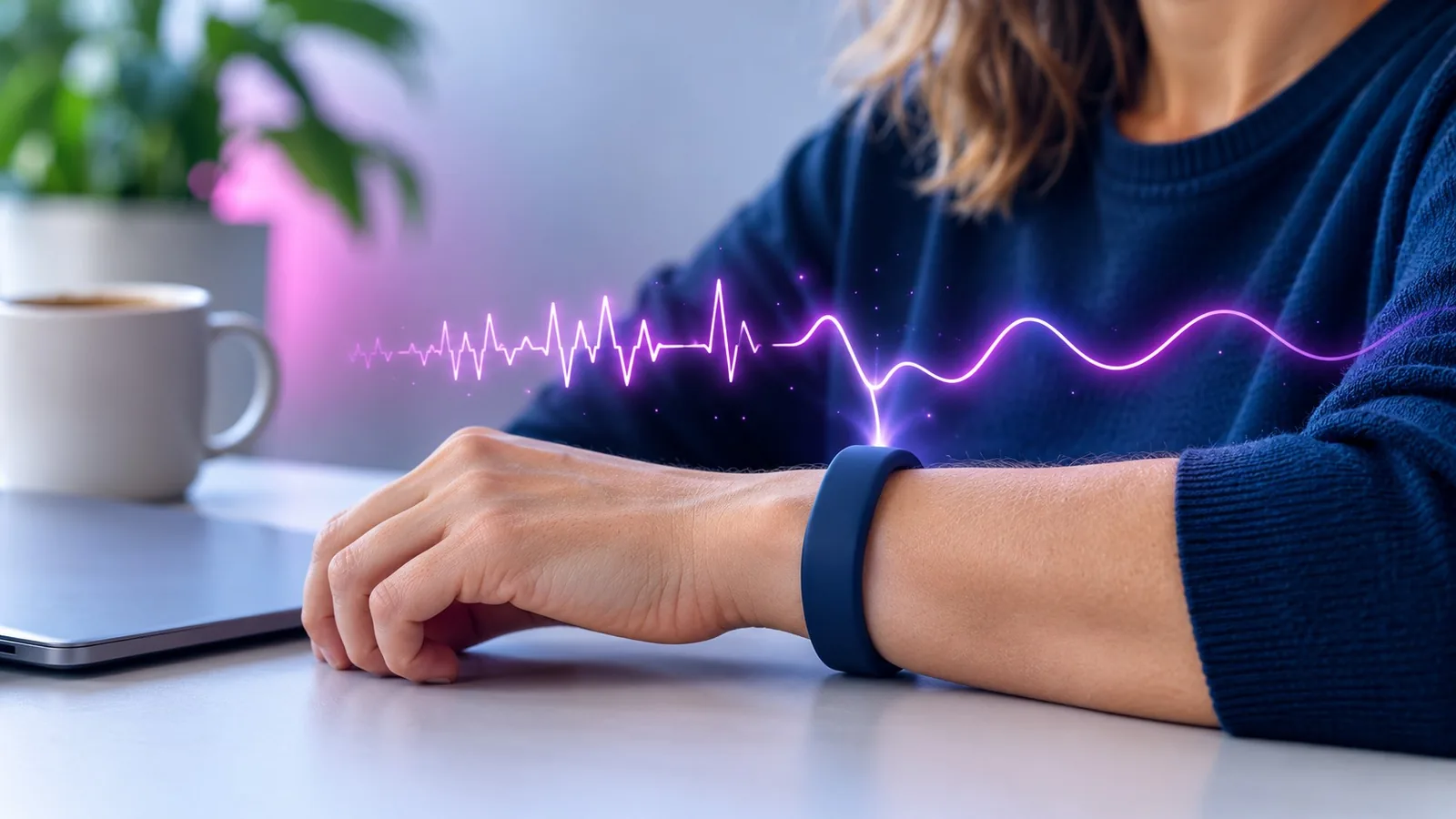
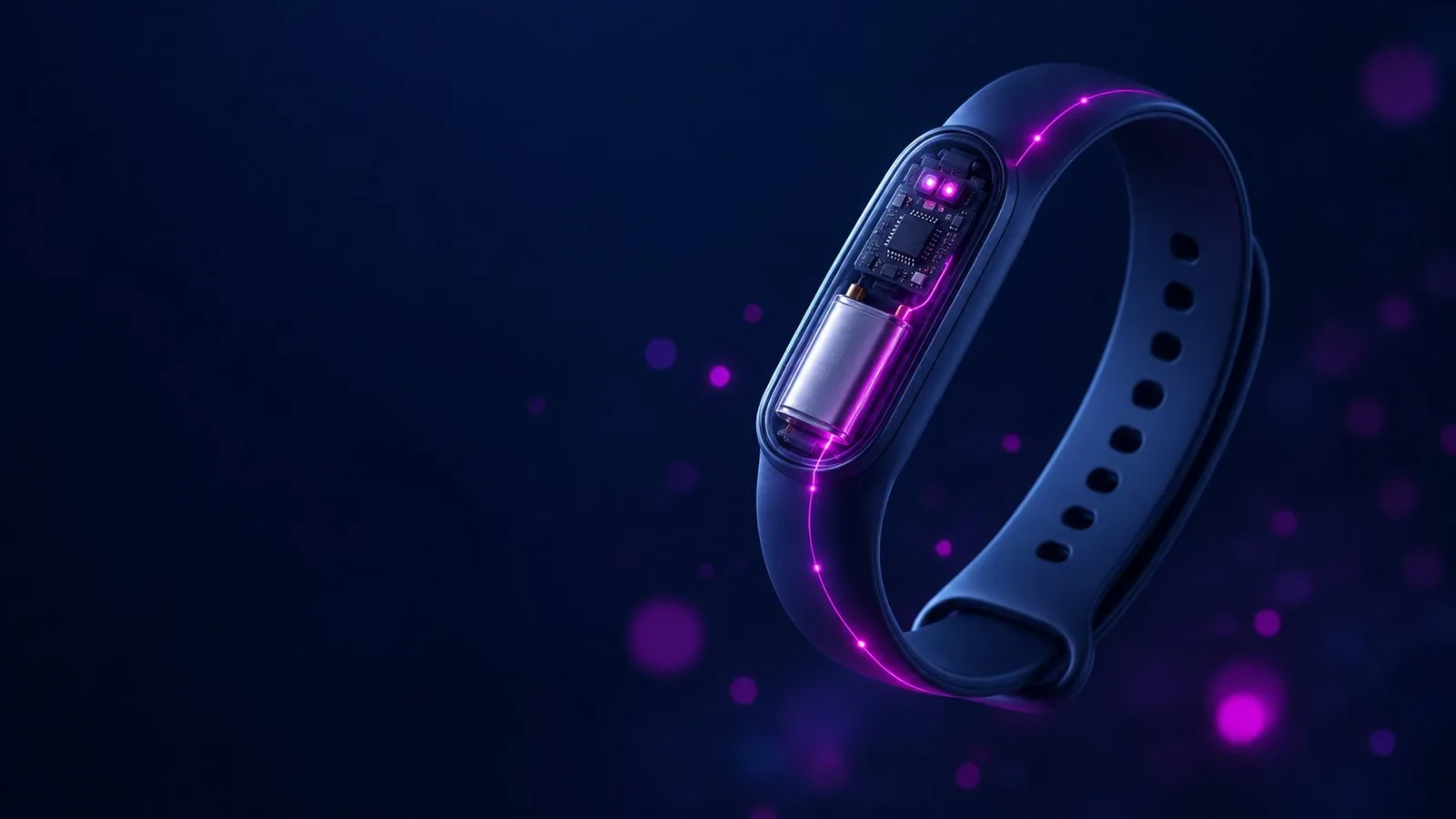
Inside a screenless wristband there is a tiny object that works non-stop, 24 hours a day: the accelerometer. It is smaller than a lentil, and yet it knows at every moment which way your arm is moving and how hard. It is the source of your daily step count, much of the information about your sleep phases and the clue that tells whether you are sitting still or walking.
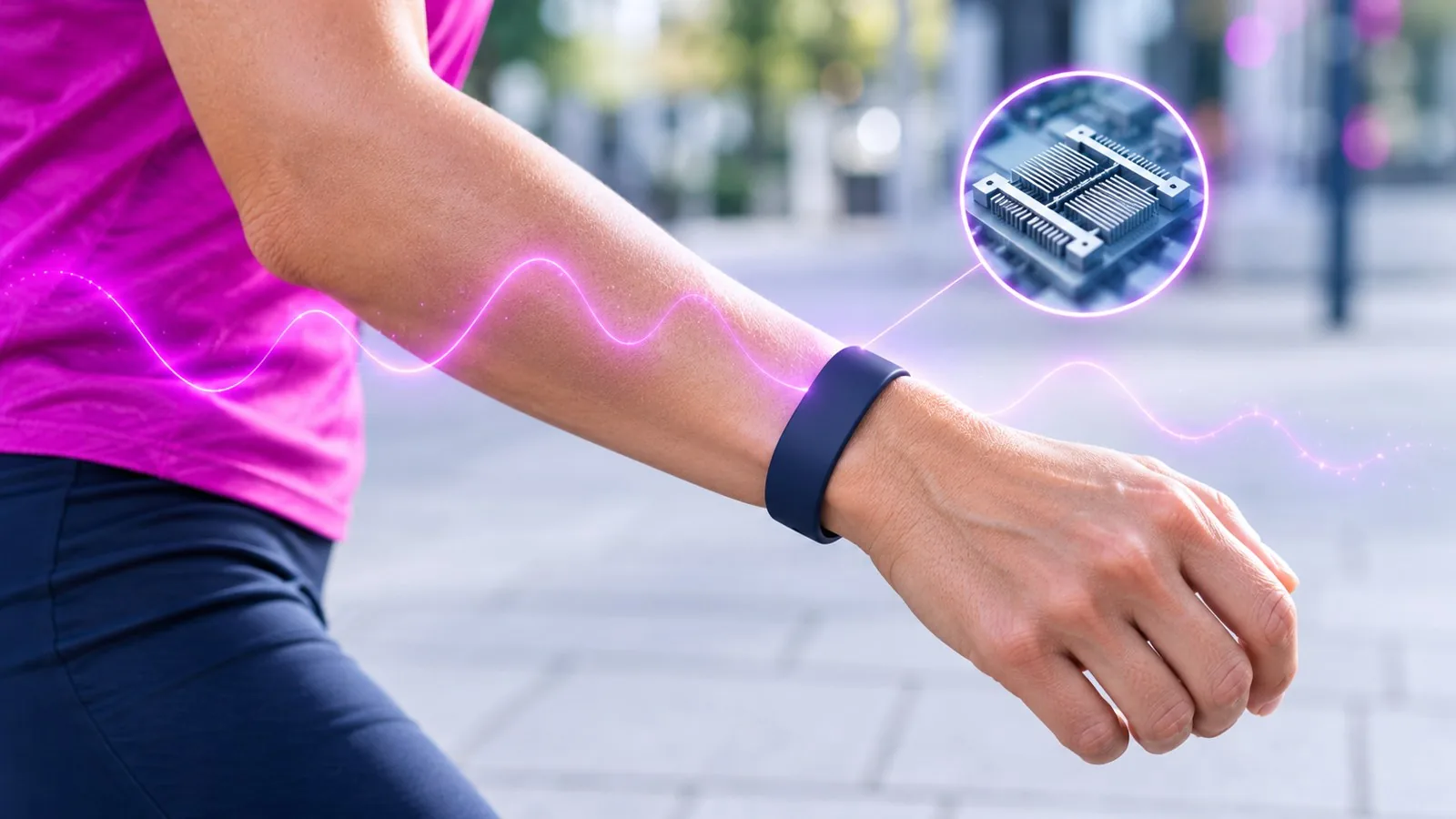
There are no wheels or pendulums, as in the pedometers of decades ago. Instead there is a comb-shaped silicon structure, with teeth thinner than a hair, suspended on microscopic springs. When you move your wrist, this piece shifts by a fraction of a micron through sheer inertia, just as your body lurches forward when the bus brakes. As it moves, the distance between the teeth and a set of fixed plates changes, and with it a tiny electrical charge. The chip translates that change into an acceleration figure.
Three axes and gravity always there
The sensor does not measure in just one direction but in three: forwards and backwards, side to side, and up and down. And it always feels a force, even when you are perfectly still: gravity. That also lets it work out how your arm is oriented. Whether your wrist is lying face up on the table or hanging beside your hip, gravity “falls” on a different axis.
To avoid draining the battery, the sensor takes a few dozen samples per second, and a small processor summarises the data before sending it to the phone. That is one of the reasons a screenless wristband can last for weeks on a single charge.
How a swing becomes a step
When you walk, every footfall produces a small jolt and your arm swings with a very regular rhythm. In the accelerometer’s signal this shows up as a series of peaks, almost like waves breaking on the shore. The algorithm does three things: it smooths the signal to remove tremors, looks for peaks that rise above a certain threshold and checks that they arrive at a believable cadence, roughly between one and three steps per second.
That last filter is the key. A single sudden movement does not count. Before the wristband starts adding up, it needs to see several peaks in a row with a steady rhythm. That is why the first steps after you get up from your chair sometimes don’t appear until you have been walking for a few seconds: the system was waiting to confirm that you really were walking.
Phantom steps and lost steps
No counter is perfect. Some movements look a lot like walking: clapping, whisking eggs, brushing your teeth or driving along a bumpy road. The algorithms try to discard them, but a few slip through.
The opposite happens too. If you push a shopping trolley or walk with your hands in your pockets, your arm barely swings and the wristband may miss some of your steps.
That is why your wristband and your phone almost never agree. The phone, in your pocket, feels the jolt of your hip; the wristband, the swing of your arm. Neither is lying: each one sees the same walk from a different place. What is useful is to compare each device with itself, day after day.
Where 10,000 steps came from
So where does the famous daily target come from? Japan, in 1965. The year after the Tokyo Olympics, the company Yamasa launched the first consumer pedometer, the “manpo-meter”, which means something like “10,000-step meter”. It got that name because it was riding a popular campaign that encouraged people to walk ten thousand steps a day: about seven kilometres with 70-centimetre strides. It did not come out of any laboratory.
Science has taken decades to put numbers on it. A large analysis published in 2025 in The Lancet Public Health, which pooled 57 studies, found that going from 2,000 to 7,000 steps a day is associated with a 47% lower risk of death from any cause. Beyond that point the benefit continues, but more and more slowly. Ten thousand is still a good goal for people who are already active, but it is no magic line.
Try this experiment this week: count a hundred steps under your breath during a walk and then check how many your wristband has added up. You will find out how accurate your counter is and, while you are at it, how much your arm swings when you walk.
Frequently asked questions
How does a wristband count steps?
An accelerometer measures wrist movement on three axes. The algorithm smooths the signal, looks for peaks above a threshold and only counts them if they arrive at a believable rhythm, one to three steps per second.
Why do my wristband and phone show different step counts?
The phone in your pocket feels the jolt of your hip; the wristband feels the swing of your arm. Each sees the same walk from a different place, so it is best to compare each device with itself.
Where does the 10,000-step figure come from?
From the “manpo-meter”, a 1965 Japanese pedometer whose name means “10,000-step meter”. A 2025 meta-analysis links going from 2,000 to 7,000 steps a day with a 47% lower risk of death from any cause.
DuckDik is a wellness product. It is not a medical device, it does not diagnose and it does not replace advice from a healthcare professional. If you have symptoms, see your doctor.